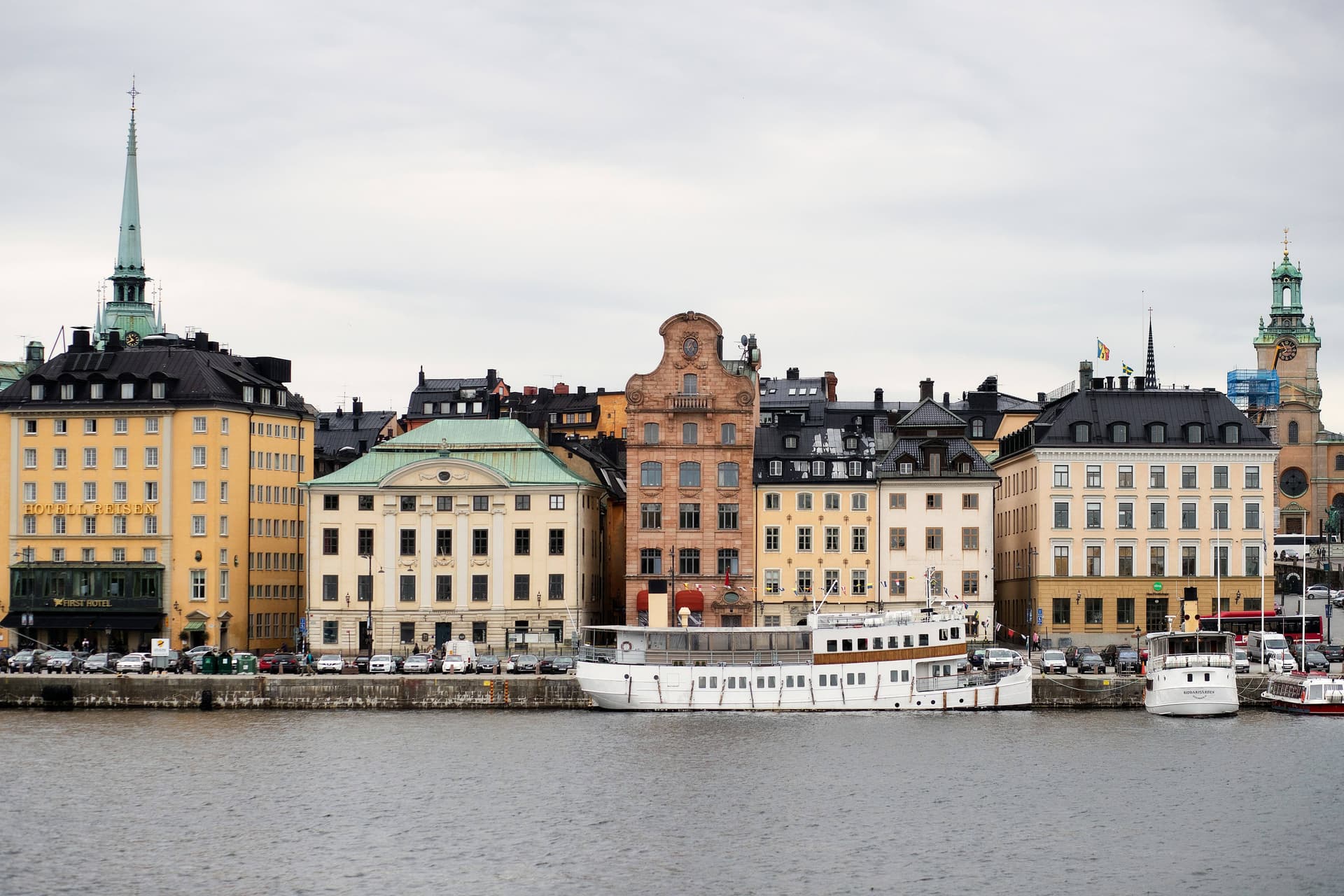
Stockholm
Stockholm
Stockholm sprawls across fourteen islands between Lake Mälaren and the Baltic Sea. A medieval old town, the Vasa Museum, a wild archipelago, and world-class Nordic cuisine make it a truly distinctive Nordic capital.
Stockholm spreads across fourteen islands linked by dozens of bridges, where Lake Mälaren meets the Baltic Sea. Sweden's capital since the 13th century, it blends a medieval old town, world-class museums, and a wild archipelago just a ferry ride away. Its historic center, Gamla Stan, sits alongside design-forward neighborhoods and Nordic gastronomy that has redefined European cuisine.
Quick Facts
- Access: Stockholm Arlanda Airport (ARN), connected to the city center by the Arlanda Express (approximately 20 minutes) and Flygbussarna buses.
- Urban transport: The Tunnelbana metro, trams, buses, and ferries cover the entire city; the Stockholm Pass includes transport and numerous museums.
- Language: Swedish; English is universally spoken.
- Currency: Swedish krona (SEK); card payments are standard, cash is rare.
- Best time to visit: June–August for long daylight hours and busy outdoor terraces; December for Christmas markets and winter atmosphere.
- Accessibility: Metro and buses are widely equipped for mobility needs; sidewalks are generally adapted in the center.
What to See
Stockholm is best explored neighborhood by neighborhood. Gamla Stan concentrates cobbled alleys, the Royal Palace, and Storkyrkan Cathedral. Djurgården, an island-park, houses the Vasa Museum, the open-air museum Skansen, and the ABBA Museum. Södermalm offers sweeping views and a vibrant creative scene. Östermalm groups the indoor market Östermalmshallen and the National Museum of History.
History and Context
Founded around 1252 by Birger Jarl to control trade between Lake Mälaren and the Baltic, Stockholm became the kingdom of Sweden's capital in the 14th century. It reached imperial height in the 17th century, when the current Royal Palace was planned. The Stockholm Bloodbath (1520) marked its break from the Kalmar Union. In the 20th century, the city reinvented itself as a model of design and social urban planning.
Highlights of a Visit
The Vasa Museum
The royal warship, which sank on its maiden voyage in 1628 and was raised in 1961, is preserved 95% intact. The museum built around the hull is one of Scandinavia's most visited. Plan for at least two hours.
Gamla Stan
Medieval Stockholm can be explored on foot in half a day. The Royal Palace (Kungliga Slottet) is one of Europe's largest palaces still in active use. The Changing of the Guard takes place daily during the season.
Skansen
The world's first open-air museum (opened in 1891), Skansen assembles historic Swedish buildings relocated from across the country, with Nordic wildlife and costumed craftspeople. Perfect for families.
The Stockholm Archipelago
Over 30,000 islands and skerries stretch east of the city. Regular ferries serve inhabited islands; Sandhamn, Vaxholm, and Grinda are among the most accessible for a day trip.
The Culinary Scene
Stockholm is home to several Michelin-starred restaurants and played a key role in popularizing contemporary Nordic cuisine. The Östermalmshallen market and Hötorget market allow you to explore local products, gravlax, surströmming, and rye breads without a reservation.
Photography Tips
- Best light: In summer, the midnight sun offers golden light until 10 p.m.; in winter, the low midday light is ideal for Gamla Stan.
- Viewpoints: Kaknästornet tower, the Monteliusvägen terrace (Södermalm), and the bell tower of Katarina kyrka all offer clear panoramas over the city and water.
- Vasa Museum: Flash-free photography is permitted; upper walkways provide dramatic overhead angles of the sculpted bow.
- Archipelago: Board on the starboard side to photograph islands in the morning light.
Location and Access
Stockholm sits in central-east Sweden on the Baltic coast. The Tunnelbana network (three main lines) covers central neighborhoods; Djurgårdslinjen ferries connect Slussen, Nybroplan, and Djurgården. Bromma Airport (BMA), closer to the city, serves domestic and European flights. The central station (Stockholm Centralstation) connects the city to high-speed trains to Gothenburg and Malmö.
Nearby
- Drottningholm Palace — UNESCO-listed royal residence, accessible by boat from the city center.
- Vaxholm — charming fortified town in the archipelago, about an hour by ferry.
- Sigtuna — Sweden's oldest town, about 45 minutes by train to the northwest.
- Uppsala — university town with a Gothic cathedral and castle, about 40 minutes by train.
- Sandhamn — outer archipelago island, departure point for regattas and coastal hikes.
Want to discover this destination?
Our local advisors design your tailor-made trip.