Stockholm and the Archipelago
A capital set on 14 islands and an archipelago of 30,000 islets reaching the Baltic Sea, where yellow ferries, red cabins and cutting-edge museums can be explored in 3 to 4 days.
Stockholm holds a singular position in Europe: the city stretches across 14 islands at the junction of Lake Mälar and the Baltic Sea, connected by 57 bridges. This amphibious geography shapes everything—urban planning, transport, the very rhythm of time. From our offices in the capital, we watch the yellow ferries of Waxholmsbolaget depart every hour from Strömkajen quay toward the 30,000 islands and islets of the archipelago that extends 80 km into the open sea.
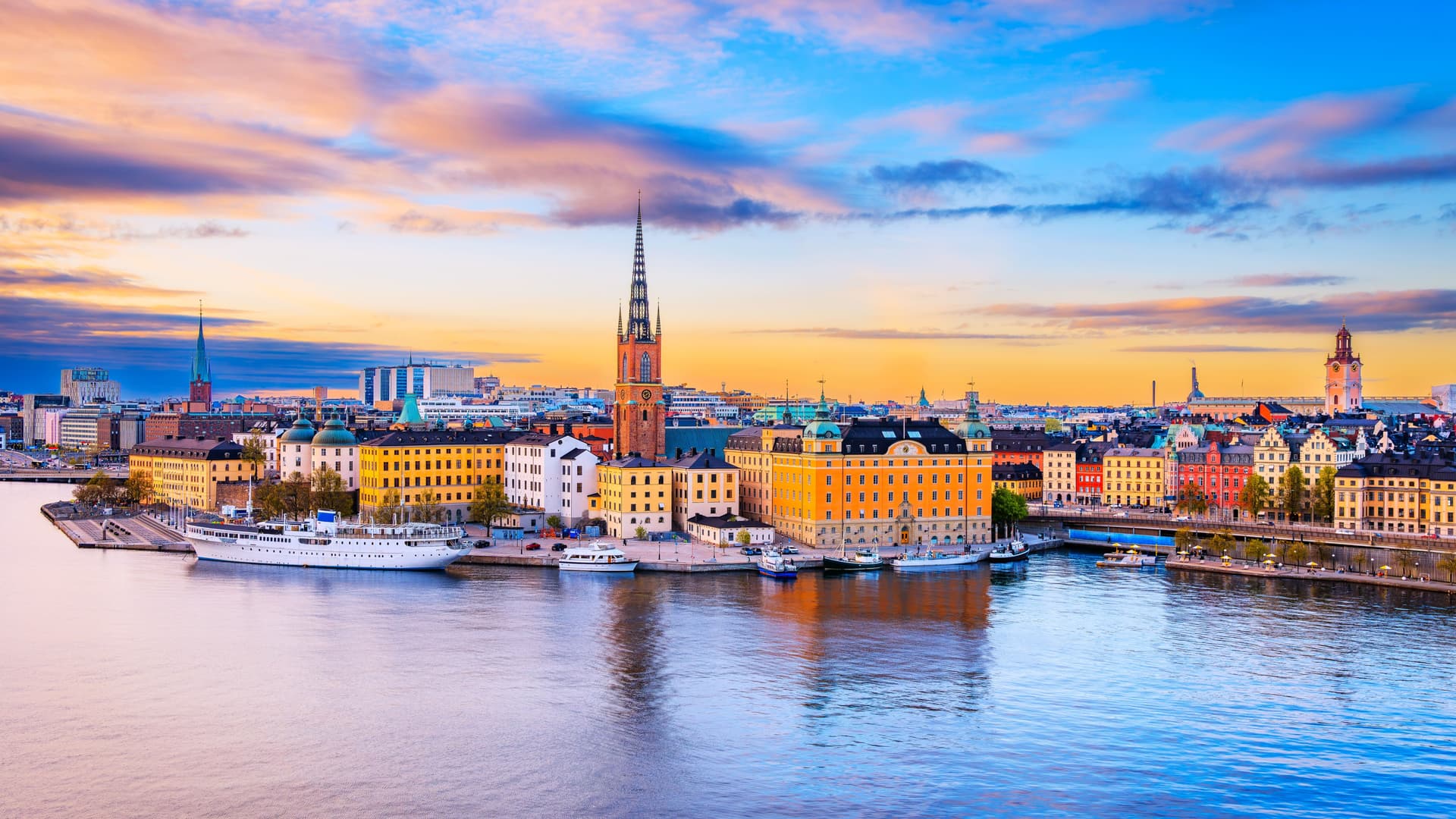
The historic heart, Gamla Stan, occupies three islands founded in the 13th century. Its cobbled lanes, including Mårten Trotzigs gränd—just 90 cm wide—lead to the Royal Palace, Storkyrkan Cathedral, and Stortorget square bordered by ochre façades. Half a day suffices to tour it, but we recommend returning in the evening once tour groups have left and the wine bars along Österlånggatan open their doors. To the north, Norrmalm concentrates institutions and the NK department store; to the east, Östermalm lines up fin-de-siècle bourgeois apartments and Saluhall, the covered market open since 1888, where you lunch on Skagen toast with shrimp or mustard herring.
Djurgården island, once a royal hunting reserve, concentrates within 3 square kilometers the majority of museums worth the detour. The Vasamuseet displays a warship sunk in 1628 during its maiden voyage and raised in 1961, preserved 95% intact thanks to the Baltic's low salinity. Nearby, Skansen, the world's first open-air museum founded in 1891, gathers 150 traditional buildings relocated from across Sweden. The Moderna Museet on Skeppsholmen and Fotografiska on Södermalm round out an itinerary that requires two full days if you want to avoid rushing.
Södermalm, the southern island, has traded its working-class past for vibrant neighborhood life centered on SoFo, the triangle of streets Skånegatan, Bondegatan, and Nytorgsgatan. This is where we send our travelers for specialty coffee shops, independent Swedish design boutiques, and views from Monteliusvägen over Lake Mälar. The fika culture—a coffee-and-cinnamon bun pause around 3 p.m.—structures Swedish days and is practiced everywhere, from the Vete-Katten tea salon to the Tössebageriet pastry shop in Östermalm.
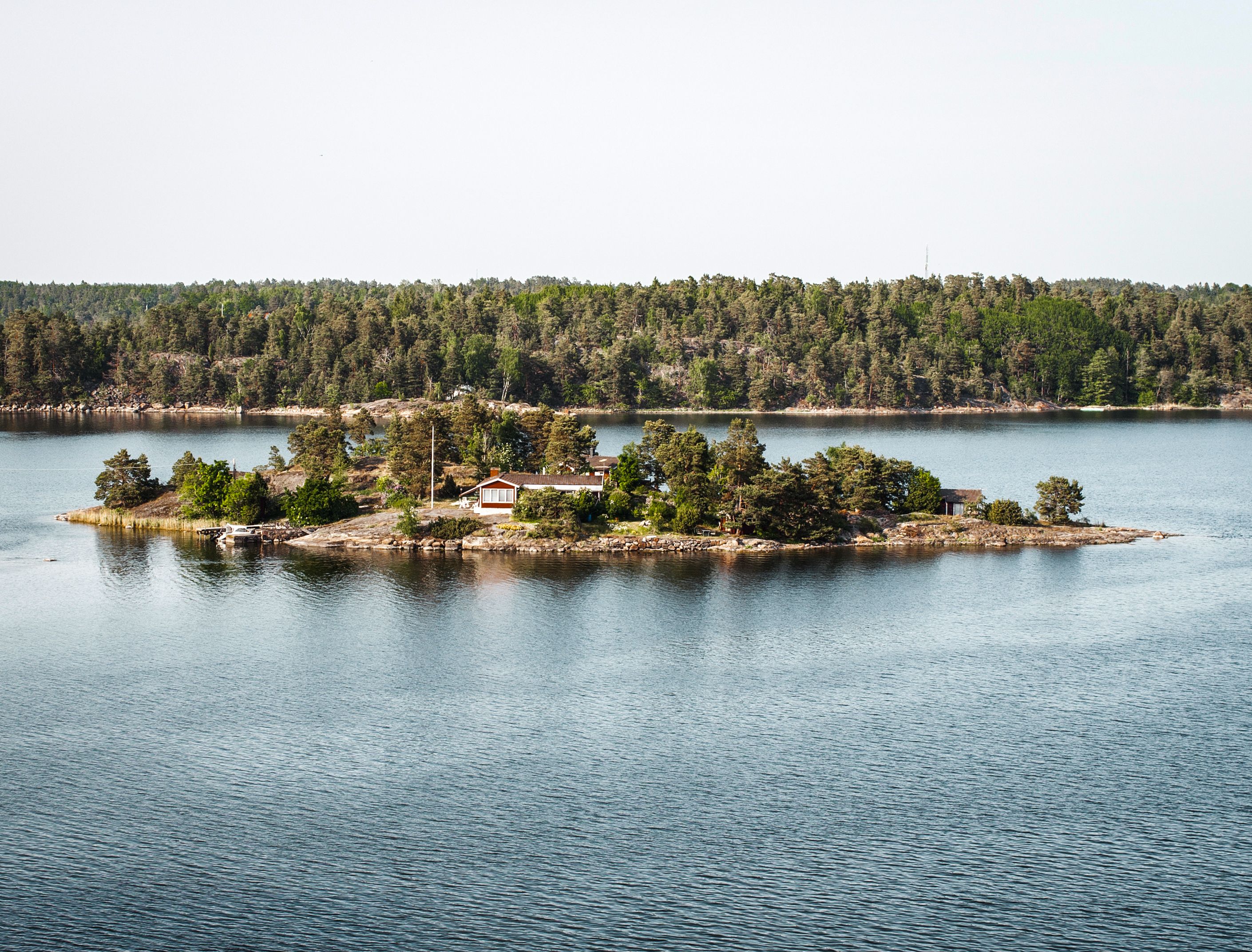
The archipelago begins at Vaxholm, an hour by boat and historic gateway with its 16th-century fortress. Further out, the islands shift character: Grinda with its red cabins for rent, Sandhamn with its marina 2.5 hours from Stockholm, Utö to the south for cycling and hiking, Finnhamn for silence. Houses are wooden structures painted in falu rödfärg, that distinctive Falun red derived from copper oxides mined in Dalarna. Here you eat smoked herring, crayfish in August during the kräftskivor celebrations, and crisp knäckebröd. The water, fresh on the Mälar side and salty toward the Baltic, is swimmable from late June to mid-August, around 18–20 °C.
The climate remains temperate for the latitude (59° North), moderated by the Gulf Stream and water masses: 22 °C in July, 0 °C in January with the sea sometimes frozen in the inner straits. The light varies dramatically: 18 hours of daylight in late June, just 6 hours in late December. This variation shapes our planning and the rhythm of travelers on the ground.
Must-See
The Vasamuseet on Djurgården. A 69-meter warship sunk in 1628 and preserved 95% intact, presented over seven floors in a museum design that contextualizes 17th-century imperial Sweden.
Night in a red cabin on Grinda. Two hours by ferry from Strömkajen, then a stuga wooden cottage painted in falu rödfärg, dinner at Grinda Wärdshus, and a Baltic swim at 18 °C in July.
Gamla Stan outside peak hours. The old town at 8 a.m. or after 7 p.m., cobbled streets emptied of tour groups, fika pause at Sundbergs Konditori, open since 1785—Stockholm's oldest café.
Fotografiska and Södermalm. Photography museum housed in a former customs building on the southern quays, followed by a walk to Monteliusvägen for views of the City Hall and Mälar.
Kräftskiva in August. The traditional crayfish festival with paper lanterns and pointed hats, which we arrange for travelers present between the second week of August and early September.
When to Go
High season runs from mid-June to end of August: 18 to 22 °C on average, up to 18 hours of daylight around the solstice, archipelago fully accessible with enhanced ferry schedules. This is also the period of defining celebrations—Midsommar around June 21 (flower-decorated maypole, fresh herring, schnapps)—and the August kräftskivor. Stockholmers themselves depart to their archipelago stugor; the city partially empties and some restaurants close for three weeks in July.
May and September offer an appealing compromise: 12 to 16 °C, still generous daylight, archipelago accessible but less crowded, accommodation prices 20 to 30% lower. November to February concentrate the constraints: 0 to -5 °C, 6 hours of daylight, archipelago ferries reduced to essential routes, some islands inaccessible if ice forms. This season justifies a purely urban exploration—Christmas markets at Skansen and Gamla Stan in December, museums, design, gastronomy. Rainfall remains moderate year-round, around 540 mm distributed fairly evenly, with a slight peak in July and August.
Practical Advice
We recommend 3 to 4 days in Stockholm, including a minimum of one night in the archipelago to grasp the Swedish relationship with water. Allow 1 day for Gamla Stan and Djurgården, 1 day for Södermalm and Östermalm, 1 to 2 days for the archipelago depending on which island you choose. Arlanda Airport is 40 minutes from the center via the Arlanda Express (direct train every 15 minutes). On site, the SL card covers metro, bus, and public ferries, and the Waxholmsbolaget pass is essential for exploring the archipelago without booking each journey separately.
Stockholm logically pairs with Dalarna and Lake Siljan (3 hours by train to Mora for folk traditions and painted wooden horses), with Swedish Lapland (1 hour 25 minutes by flight to Kiruna for northern lights between November and March), or with Scania and the south via Malmö (4.5 hours by train, castles and sandy coast). The region suits urban travelers drawn to design and architecture, families thanks to short distances and Skansen, contemplatives willing to spend two days in an archipelago cabin with no cell signal. Hotel comfort is high, from boutique hotels in Gamla Stan to family pensions (pensionat) in Sandhamn or Vaxholm.