Scania and the South
At the temperate southern tip of Suède, Scania blends rapeseed fields, Baltic beaches, Hanseatic towns and chef-led tables, just 35 minutes from Copenhagen.
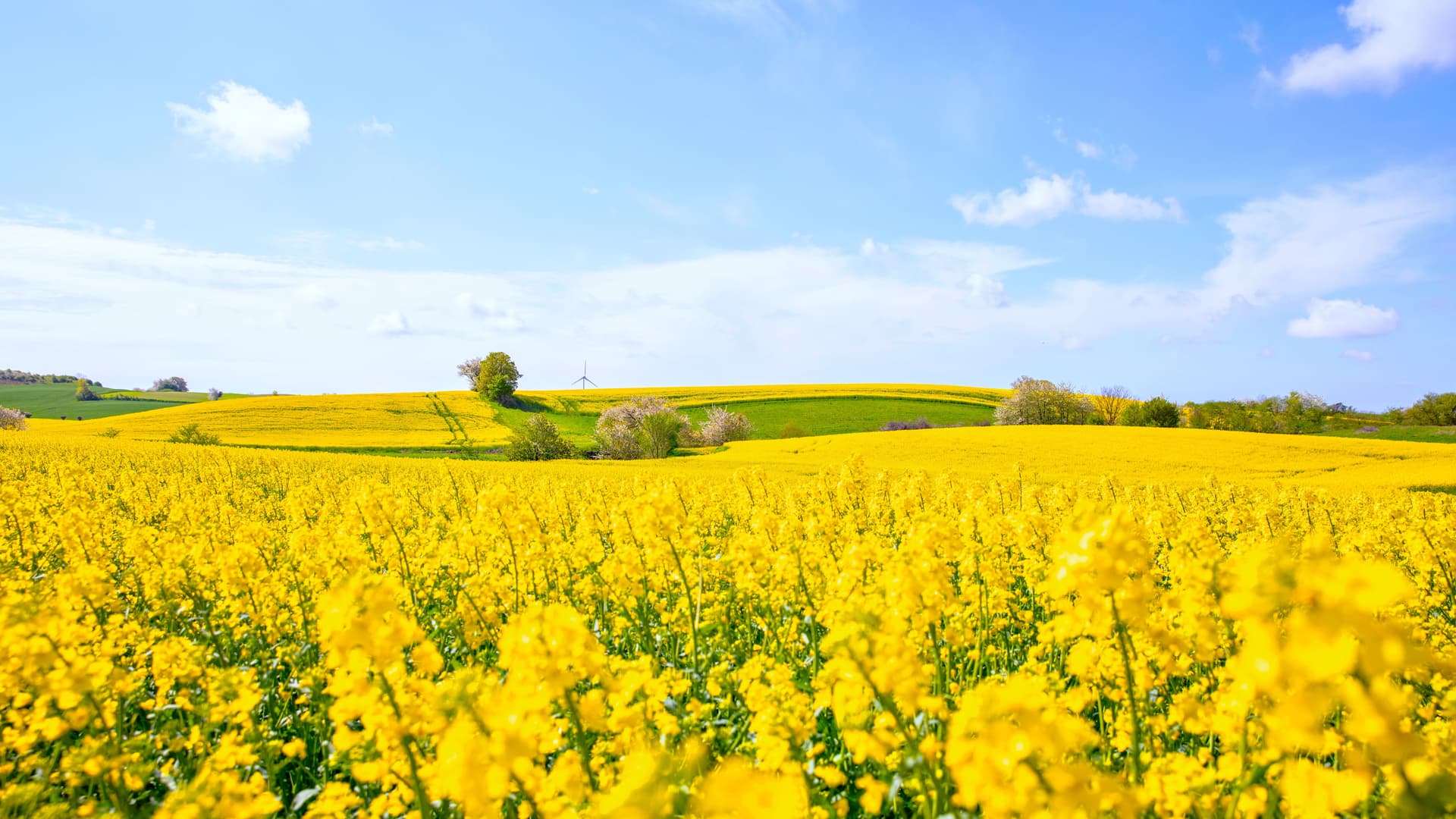
Scania, known to Swedes as Skåne, occupies the southernmost point of the country. This province was Danish until the Treaty of Roskilde in 1658, and the heritage is visible everywhere: half-timbered houses painted in Falun red, sturdy Romanesque churches, a local accent instantly recognizable to Stockholm residents. The landscapes stand in stark contrast to the classic image of Suède: here, no endless boreal forests or glacial lakes, but open fields of rapeseed and sugar beet, bocage hedgerows, and a low horizon that recalls neighbouring Denmark or the plains of northern Germany.
Malmö, the country's third-largest city with 360,000 inhabitants, serves as the gateway. Since the opening of the Øresund Bridge in 2000, it has been connected to Copenhagen by train in 35 minutes. This proximity has transformed Malmö into a cross-border city: many residents work in Denmark, and the combined metropolitan area with Copenhagen reaches nearly 4 million people. The Västra Hamnen district, a converted shipyard, houses Santiago Calatrava's Turning Torso tower and a waterfront where residents swim as soon as temperatures exceed 18°C.
An hour to the east, Lund is home to one of Scandinavia's oldest universities, founded in 1666, and a Romanesque cathedral from the 12th century whose crypt contains the giant Finn, a legendary figure carved into a pillar. To the south, Ystad gained fame through Henning Mankell's crime novels featuring Inspector Wallander. The town preserves a well-maintained medieval centre and serves as a base for exploring Österlen, Scania's eastern coast. Here lie the white sand beaches of Sandhammaren, often ranked among Europe's finest by Nordic guides, and Ales Stenar, a circle of 59 standing stones in the shape of a ship, dating to the Iron Age, which overlooks the Baltic from a 35-metre cliff.
Scanian gastronomy holds a unique place in Suède. The region is the country's breadbasket: 50% of national agricultural production, apples from Kivik, roasted geese enjoyed on Saint Martin's Day on 10 November, spettekaka, a pyramidal cake cooked on a spit, and an acclaimed chef scene. The Michelin-starred restaurant Daniel Berlin at Skåne Tranås works exclusively with producers within a 30 km radius. The Österlen orchards and Hällåkra wine estates, one of Suède's rare wine regions, bear witness to the temperate climate that characterizes the province.
Further east, the neighbouring province of Blekinge extends Scania along the Baltic coast. Karlskrona, a baroque town founded in 1680 as a Swedish naval base and inscribed on the UNESCO World Heritage List, preserves its original arsenals and grid-pattern layout. The Blekinge archipelago comprises nearly 700 islands, accessible by ferry from Karlskrona or Karlshamn, and remains largely unknown to international tourist circuits. Northeast of Scania, the province of Småland offers a stark contrast with its dense forests, lakes and the Kingdom of Crystal (Glasriket), where the glassworks of Kosta Boda and Orrefors carry on a tradition begun in the 18th century.
Scanian lifestyle blends rural pragmatism with continental openness. Square farms, organised around a central courtyard, remain typical of the landscape. Many have been converted into guesthouses or country restaurants. Stenshuvud, a coastal national park spanning 390 hectares, and Söderåsen, whose gorges reach 90 metres deep, complete a picture more varied than a first impression of agricultural plains might suggest.
Things to discover
The Øresund Bridge and cross-border Malmö. A 16 km crossing above the strait separating Malmö from Copenhagen, including 4 km of underwater tunnel. We organise combined Malmö–Copenhagen days on foot and by train from the central station.
Ales Stenar and the Österlen coast. A circle of 59 megaliths in the shape of a Viking ship on a cliff overlooking the Baltic, near the village of Kåseberga. Can be combined with the Sandhammaren beaches and local herring smokeries.
Karlskrona and the Blekinge archipelago. UNESCO-listed baroque arsenal town, departure point for 2 or 3 days of sailing in an archipelago of 700 islands, far less frequented than Stockholm's.
Orchards and tables of Österlen. Apple route between Kivik and Simrishamn in September, family cider houses and restaurants run by chefs working within a 30 km radius.
Söderåsen National Park. Forest gorges 90 metres deep carved into the granite bedrock, 1 hour from Malmö. Hike 4 to 8 km on the Skåneleden trail, spectacular beech forests in late October.
When to visit
Scania enjoys Suède's mildest climate. July and August temperatures average between 20 and 23°C, peaking at 28°C, and the Baltic water reaches 18 to 20°C, allowing swimming on the Sandhammaren and Mölle beaches. High season runs from mid-June to mid-August, with visitors mostly from Denmark and Germany. September remains our preferred time: 16 to 18°C, golden light over harvested fields, the start of apple season at Kivik, and more affordable accommodation rates.
Winters are mild for Suède, rarely below -5°C, but damp and windy. December days offer 7 hours of daylight, compared to 17 hours in late June. We advise against November and February for a purely Scanian stay: low skies, little stable snow, many coastal sites closed. Conversely, from late April to early May, when rapeseed fields bloom bright yellow for kilometres on end and Söderåsen's beeches emerge from winter, the region takes on a particularly striking character.
Practical advice
We recommend 4 to 6 days for Scania alone, enough time to combine Malmö, Österlen, Ystad and a venture to Lund or Söderåsen. Copenhagen-Kastrup airport, 25 minutes by train from Malmö via the bridge, is the most convenient gateway from France, with more direct connections than Malmö-Sturup. A rental car remains essential for exploring the countryside and east coast, given short distances (Malmö–Ystad: 65 km, Malmö–Kristianstad: 95 km) but limited public transport outside urban areas.
The region lends itself particularly well to a cross-border Suède-Denmark combination over 10 to 12 days, incorporating Copenhagen and the north coast of Sjælland. For a purely Swedish itinerary, the most natural route leads to the West Coast and Bohuslän via the E6 (3 hours' drive to Göteborg), or to Stockholm and the archipelago via the X2000 high-speed train (4 hours 30 minutes). Scania suits contemplative travellers, food and heritage enthusiasts, and families who appreciate short distances and accessible beaches. Comfort levels are high, with a good network of converted manor houses, gårdshotell (farm hotels) and fine dining establishments.