Swedish Lapland
Beyond the Arctic Circle, 200 clear nights per year at Abisko for the northern lights, Sami culture in Jokkmokk and 440 km of the royal trail on the Kungsleden.
Swedish Lapland covers the northern quarter of the country, beyond the Arctic Circle. Our team based in the capital organizes departures from Kiruna, a mining town of 17,000 inhabitants whose centre is being relocated 3 km to the east: the underground iron mine of Kiirunavaara, operated by LKAB since 1898, is causing ground subsidence that makes the old quarters uninhabitable. The red wooden church from 1912 will be one of the last buildings relocated, around 2026.
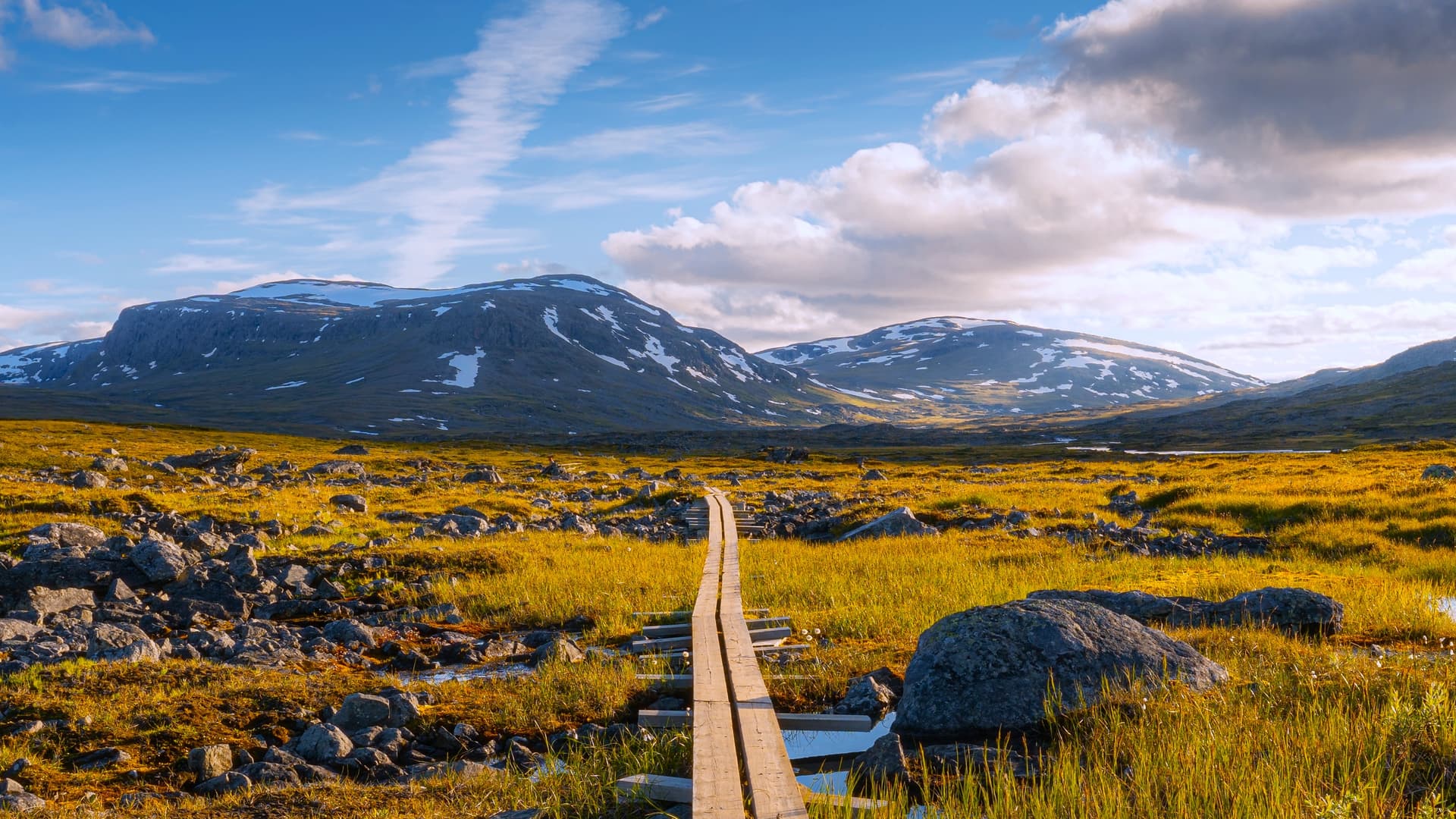
The landscape consists of tundra, birch and spruce forests, lakes frozen eight months a year, and peaks like Kebnekaise rising to 2,097 m, Sweden's highest point. To the west, Abisko National Park benefits from a dry microclimate due to the shelter effect of the neighbouring Norwegian massif: it sees approximately 200 clear nights per year, making it one of the world's best sites for observing the northern lights between late September and late March. Abisko's scientific station, founded in 1903, monitors geomagnetic activity in real time.
The region is the ancestral territory of the Sami people, present on the Fennoscandinavian peninsula for several millennia. Reindeer herding still structures the economy of many families, organized into sameby (herding communities). Jokkmokk, 200 km south of Kiruna, hosts the Sami winter market every first Thursday of February, a tradition over 400 years old: duodji craftsmanship, smoked reindeer meat sales, demonstrations of joïk (traditional singing). The Ájtte Museum in Jokkmokk presents Sami culture and mountain ecology—a stop we recommend to any traveller curious to understand the place they're visiting.
Jukkasjärvi, a village of 540 inhabitants 17 km from Kiruna, is known for the Icehotel built each winter since 1989 using ice from the Torne River. The establishment melts every spring and is reconstructed in November by around thirty invited artists. A permanent section, Icehotel 365, now operates year-round thanks to solar panels powering refrigeration in summer. Nearby, the small wooden church from 1608 houses an altarpiece signed by Bror Hjorth, painted in 1958, which blends Christian iconography with Sami figures.
On the climate front, winter is the main draw: average temperatures between -15 and -30 °C from December to March, stable snow, very short days (at Kiruna, the sun doesn't rise from December 11 to January 1). We systematically provide cold-weather equipment (suits, boots, gloves) for activities: snowmobile safaris, dog sledding with Siberian huskies, frozen lake driving, ice fishing. In summer, the midnight sun illuminates the region from May 28 to July 16 at Kiruna, opening the door to hikes on the Kungsleden, a 440 km marked trail connecting Abisko to Hemavan, dotted with STF shelters every 10 to 20 km. The northern sections, between Abisko and Nikkaluokta, can be completed in 6 to 8 days.
Economically, the region lives by iron, tourism and herding. The overnight train Stockholm-Narvik, which passes through Kiruna and Abisko, carries as many passengers as ore on the Malmbanan line. It is this interplay between heavy industry, living indigenous culture and sparsely populated nature (2 inhabitants per km²) that gives Swedish Lapland its distinctive character, far from the standardized Arctic postcard.
Must-see highlights
Northern lights at Abisko. The national park, 1 hour 15 minutes' drive from Kiruna, offers clear skies on about 200 nights per year. We combine observation from Aurora Sky station, accessible by chairlift at 900 m, with a snowshoe excursion away from the lights.
Night at Icehotel in Jukkasjärvi. Rooms carved into ice at -5 °C, cold-weather sleeping bag on reindeer hide. The vodka bar serving drinks in ice glasses operates all night during the polar night.
Sami winter market in Jokkmokk. First Thursday, Friday and Saturday of February, around -25 °C. Crafts in reindeer bone and tin, dried meat, meetings with herders from the surrounding sameby communities.
Hiking the Kungsleden. 6 to 8-day walk between Abisko and Nikkaluokta in July-August, STF shelters every 15 km, boat crossing of Lake Tjäktja, views over the Kebnekaise massif.
Dog sledding in the boreal forest. Drive your own team of 4 to 6 huskies over frozen rivers around Kiruna, overnight stays in heated cabins, reindeer stew for lunch.
When to go
Two seasons structure a trip to Swedish Lapland. The main winter season runs from mid-December to mid-March: stable snow, frozen lakes passable, temperatures between -15 and -30 °C, sometimes -40 °C in January in inland valleys. This is the period of northern lights, ice activities and the Icehotel. December offers the most Arctic atmosphere with polar night, but only 3 to 4 hours of bluish daylight; February and March extend the days while preserving snow—our preferred period for families. The polar summer runs from late May to mid-August, with temperatures of 10 to 20 °C, sometimes 25 °C in July, and the midnight sun that doesn't set for six weeks at Kiruna. This is hiking season on the Kungsleden and fishing season.
We advise against two windows. April to mid-May: snow melts, trails become muddy, many operators close. Mid-August to mid-September: fewer mosquitoes but already frost at night at altitude, nights still too bright for reliable aurora viewing. Late September to mid-November is an interesting intermediate season for aurora watching without extreme cold, but without snow activities.
Practical tips
We recommend a minimum of 4 nights on site to offset travel and alternate activities, ideally 6 to 7 nights in winter to maximize chances of aurora (weather plays a role, multiple attempts are needed). The logistics hub is Kiruna airport, served by 2 to 3 daily flights from Stockholm-Arlanda (1.5 hours' flight). Alternative for slow travellers: the overnight SJ train from Stockholm, 17 hours in a cabin, which drops you at Kiruna or directly at Abisko Östra.
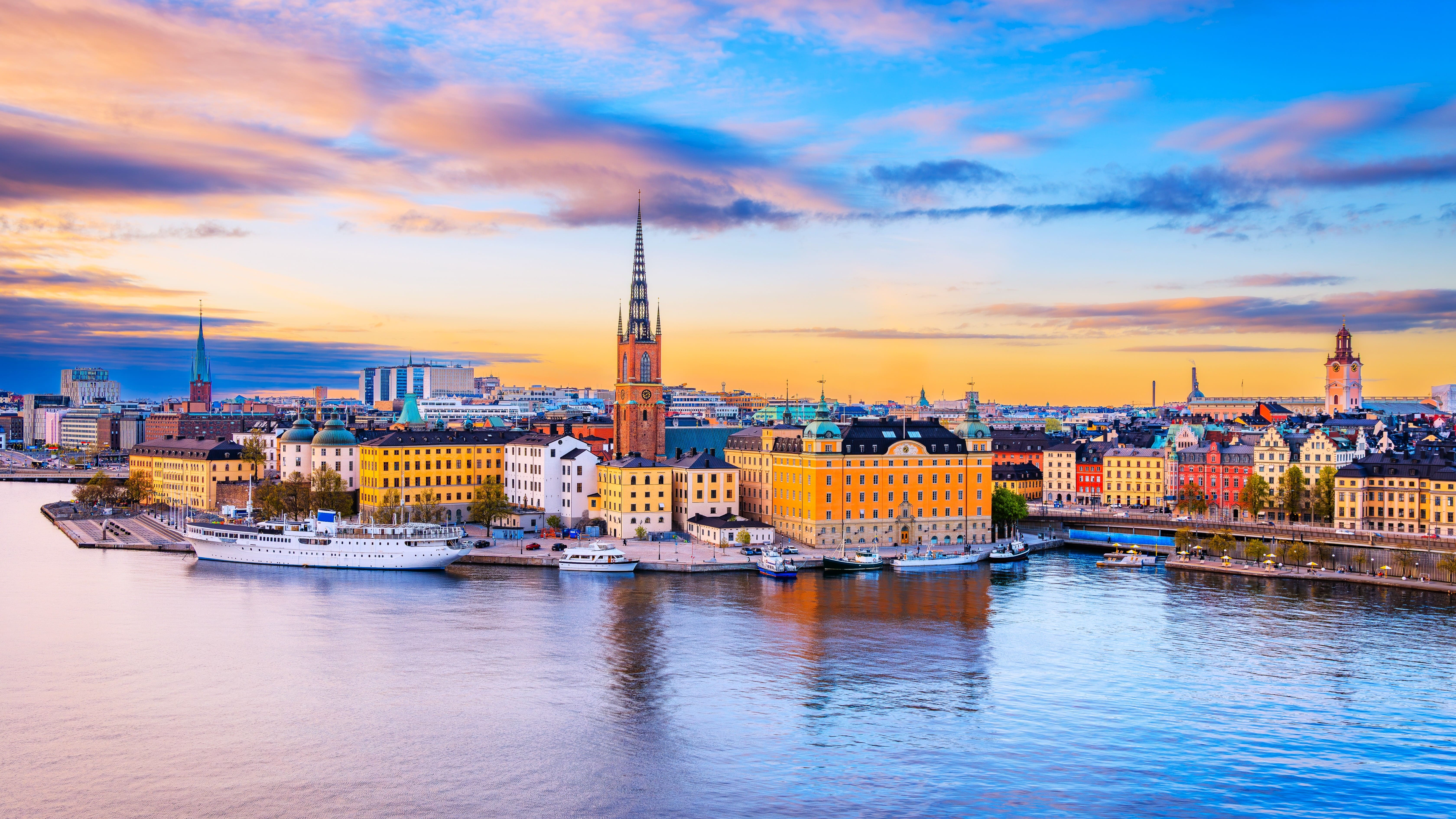
The most natural combination is Stockholm and archipelago at the beginning or end of your stay, to contrast the capital with the Far North in 10 to 12 days. For a longer trip, Dalarna and Lake Siljan intercalate well by train on the north-south route and offer a transition through Swedish folk traditions. Scania and the west coast are at the opposite end of the country and don't combine on the same trip unless you have 3 weeks minimum. Comfort in Lapland is adequate but not luxurious in the Mediterranean sense: well-heated wooden lodges, cabins sometimes without running water (sauna and dry toilets). This region particularly suits contemplatives, families with children from age 6 in winter, and self-sufficient hikers in summer. Our team provides all cold-weather equipment in winter, to be collected on arrival in Kiruna.