West Coast and Bohuslän
Sweden's Atlantic facade: 450 kilometres of polished granite, red and white fishing villages, wild oysters and the salty waters of the Skagerrak.
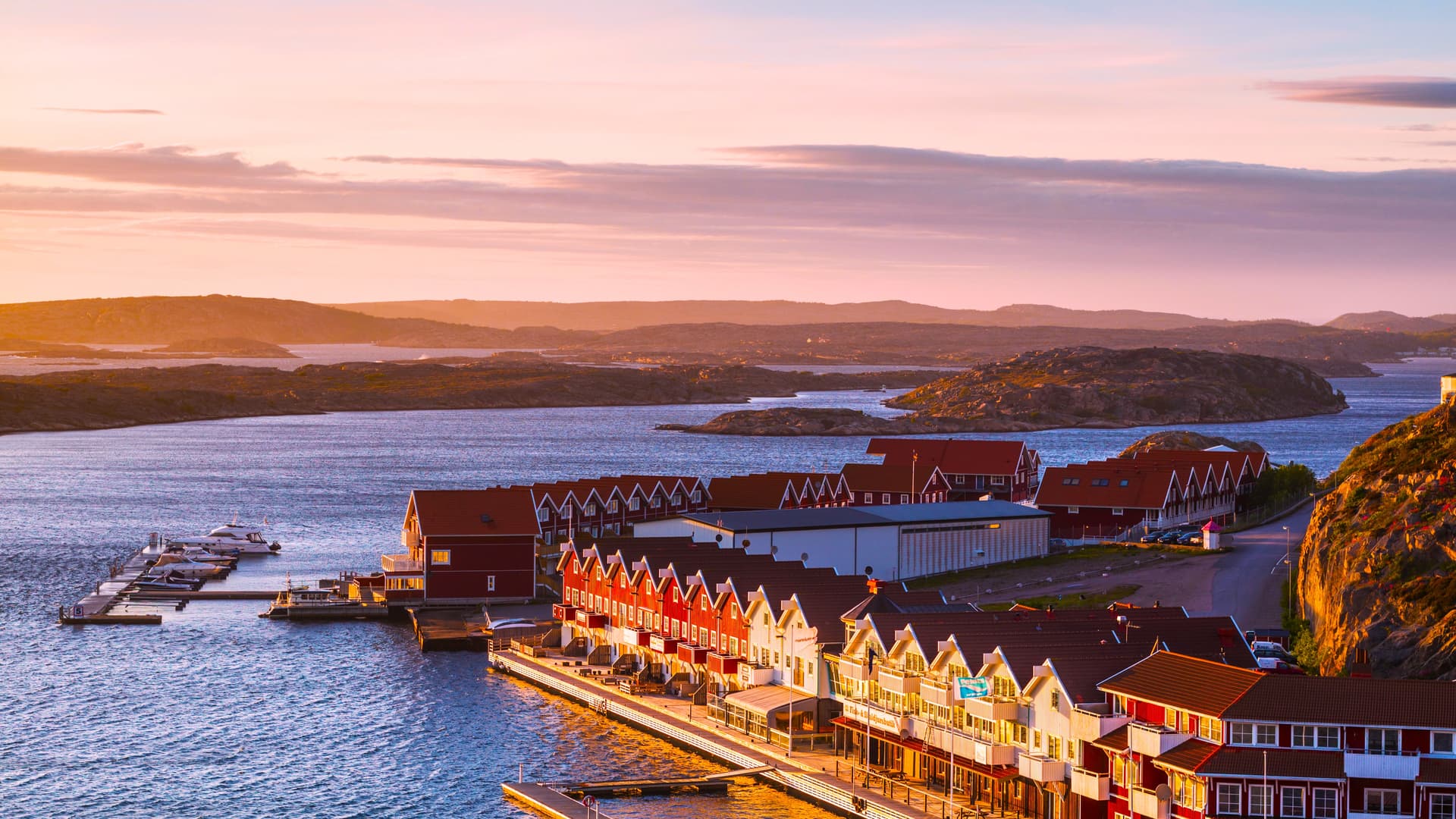
Sweden's west coast stretches approximately 450 kilometres between Gothenburg and the Svinesund border with Norway. Bohuslän, its northern portion, is a succession of pink granite rocks polished by Quaternary glaciers, split by narrow inlets and scattered with some 8,000 islands and islets. This particular geology, the klippor, gives the coastline its lunar and smooth appearance, quite unlike the forested coasts of the Stockholm archipelago on the Baltic Sea. Here, the Skagerrak borders the country—an extension of the North Sea—with saltier water, faint but real tides, and a twilight that stretches until 11 p.m. in June.
Gothenburg, the country's second city with 600,000 inhabitants, serves as the gateway. Founded in 1621 on the model of Dutch cities, it retains its canals and the old port of Haga. We often begin coastal itineraries here with a stop at the Feskekôrka covered market, a fish hall built in 1874 in a neo-Gothic church silhouette, where one can taste marinated herring in nearly twenty varieties (mustard, onion, dill, cranberry juice). North of the city, route 160 and then the E6 serve the characteristic villages of Bohuslän within 1 to 3 hours' drive.
Smögen, 130 kilometres north of Gothenburg, is the quintessential Swedish port: red wooden faluröd fishing warehouses lined along a 600-metre quay, the Smögenbryggan, where Nordic shrimp and lobsters are still unloaded between September and April. Fjällbacka, further north, is known in Sweden for having harboured Ingrid Bergman, who spent her summers there, and for the crime novels by Camilla Läckberg set in the town. Marstrand, an island connected by a 3-minute ferry, is dominated by Carlsten fortress built from 1658 and hosts summer regattas dating back to 1860. South of Gothenburg, Varberg preserves a Victorian seaside resort, the Kallbadhus, where one bathes naked, separated by gender, in the open sea year-round.
The cuisine of the coast is among the most distinctive in the country. Herring, fished here since the Middle Ages, brought fortune to Bohuslän during the great periods of abundance in the 18th and 19th centuries. Today, it is the Nordic shrimp (räkor) caught off Strömstad and Smögen, the brown crab (krabba) from September to November, the European lobster whose season opens ritually on the first Monday after 20 September, and the flat oysters of Ostrea edulis harvested by free diving in Grebbestad that define the tables. Several coastal restaurants, including Salt & Sill on Klädesholmen island, operate as floating hotel-restaurants.
The summer lifestyle is anchored in the ownership of a sommarstuga, a wooden holiday home, or a sailboat. A significant portion of western Swedes head to the islands from mid-June for six to eight weeks, which makes the region very lively between Midsummer (around 21 June) and mid-August, then noticeably quieter from September onwards. The prehistoric sites of Tanum, classified as a Unesco World Heritage site since 1994, feature over 600 panels of Bronze Age rock carvings (1800 to 500 BCE) depicting boats, hunters and ritual scenes, testifying to an ancient maritime presence on these same rocks that one walks barefoot across today.
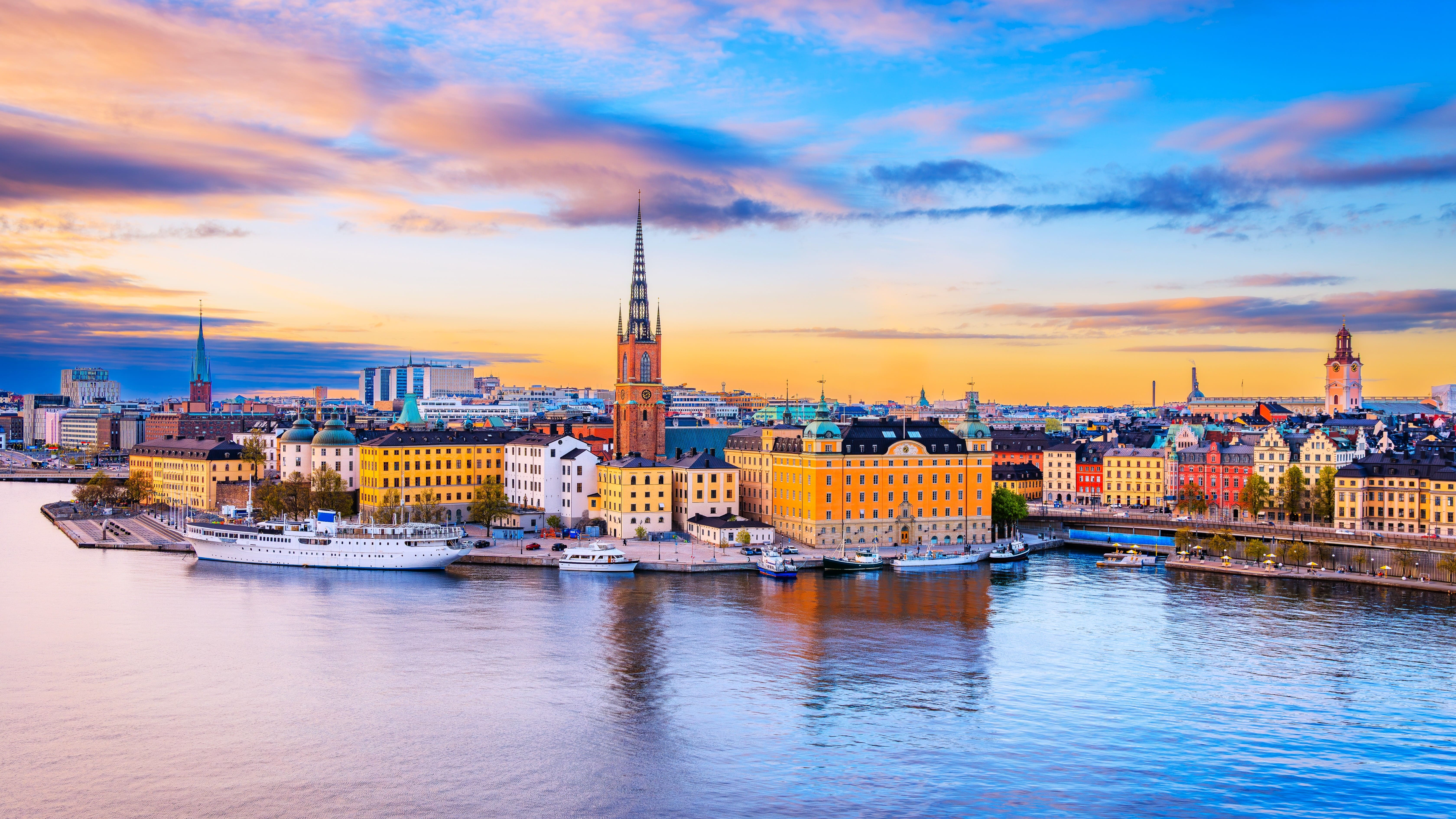
We present this region as Sweden's Atlantic facade, to be understood in contrast to Baltic Stockholm: colder and saltier water, bare granite rather than dense pine forests, fishing villages rather than aristocratic summer residences, and a perceptible Norwegian influence as soon as one heads up towards Strömstad and Koster.
To discover
The polished rocks of Smögen. Walk barefoot across pink granite domes that plunge into the Skagerrak, followed by a plate of hand-peeled Nordic shrimp on the Smögenbryggan.
The Koster islands by kayak. Marine national park created in 2009 off Strömstad, accessible by a 45-minute ferry. Waters with 32 ‰ salinity harbouring 6,000 marine species, including Sweden's only cold-water coral reefs.
Rock carvings at Tanum. At Vitlycke, near Tanumshede, 300 metres of carved outcrop on which modern red pigments bring out boats, warriors and Bronze Age ploughing scenes.
Marstrand and Carlsten fortress. Pedestrian island 45 minutes from Gothenburg, dominated by its 17th-century stone citadel. Sea bathing, classic sailing and seafood restaurants in former port warehouses.
Oyster safari in Grebbestad. A 3-hour boat trip with a licensed fisherman to harvest wild flat oysters, tasted on board with bread and butter. 90% of Swedish oysters come from this bay.
When to go
The useful maritime season runs from mid-May to mid-September. June and early July offer the longest days, with sunset around 10:30 p.m. at Gothenburg's latitude, daytime temperatures of 18 to 22 °C and water that gradually rises from 14 °C in May to 18–20 °C by late July. August remains very pleasant, warmer in the water but with evenings cooling to 15 °C. We avoid the fortnight surrounding Midsummer (around 21 June) and the first two weeks of July for Bohuslän's charming accommodation, which is fully booked a year in advance and frequented by Swedish holidaymakers.
September and October are another season, wetter (100 to 120 mm of monthly rainfall) and windier, but this is when lobster opens (the first Monday after 20 September) and brown crab season, with villages nearly deserted. From November to April, the coast shuts down: many restaurants and hotels close, temperatures hover around 0 to 5 °C, strong westerly winds. We do not organise coastal stays between late October and late April, except on specific request around Gothenburg, which remains active year-round.
Practical advice
We recommend a minimum of 4 days for the region, 6 to 7 to tour it all the way to the Norwegian border and the Koster islands. Entry is via Gothenburg-Landvetter airport, connected to Paris, Brussels or Amsterdam by direct flight. A rental car is essential to reach the Bohuslän villages, with the E6 serving the entire coast to Strömstad in 2 hours 15 minutes. Distances between Smögen, Fjällbacka and Grebbestad are short (20 to 40 minutes), allowing you to base yourself in a single accommodation and explore from there.
The most coherent combination remains with Stockholm and its archipelago: we frequently build 10 to 12-day itineraries that contrast Bohuslän's Atlantic facade with Stockholm's Baltic facade, connected by X2000 train in 3 hours 20 minutes. Equally relevant when combined with Scania for a complete southern circuit by road, or with Dalarna for those who want to add an interior and lakeside dimension. The comfort level is high: boutique hotels in converted fishing warehouses, family inns (pensionat), a few gastronomic tables. The region is particularly suited to contemplative travellers, seafood enthusiasts and cold-water swimmers, families with teenagers (kayaking, sailing, cycling on Tjörn island) and coastal hikers who will follow the Kuststigen, a marked 27-stage trail along the coastline.